
The Sudreys Garden 12th- 13th century
The History
The Kingdom of Man and the Isles emerged as a significant power in the Irish Sea and was composed of the Isle of Man and four groups of Western Isles known collectively as the Sodorenses or Southern Isles (they are Southern Isles from a Norwegian perspective). This period saw the emergence of Tynwald as the pattern of government for the Island and the Manx church linked to Nidaros in Norway from 1154-1542. This was brought about by Nicholas Breakspear, Pope Adrian IV, the only English Pope there has been.
The Design
The proposal is to lay mosaic paving down forming a map of the Island Empire of the Sudreys, which takes as its inspiration the mosaic flooring to be found at Madaba in Jordan.
The map will indicate the extent of the Sudreys. Some of the most important ecclesiastical sites as far as the Island empire was concerned will be highlighted, including Bangor, Douglas, Iona, Furness, German, Rushen, Sabal, St Bees and Whithorn.
A large chess board will be located in the garden indicating one of the great buried treasures found in the Sudreys in 1831 and today known as the Lewis Chessmen. They were carved from walrus tusks and whale teeth in the late 12th or early 13th century. They are Scandinavian in origin and may have been made in Nidaros, today’s Trondheim.
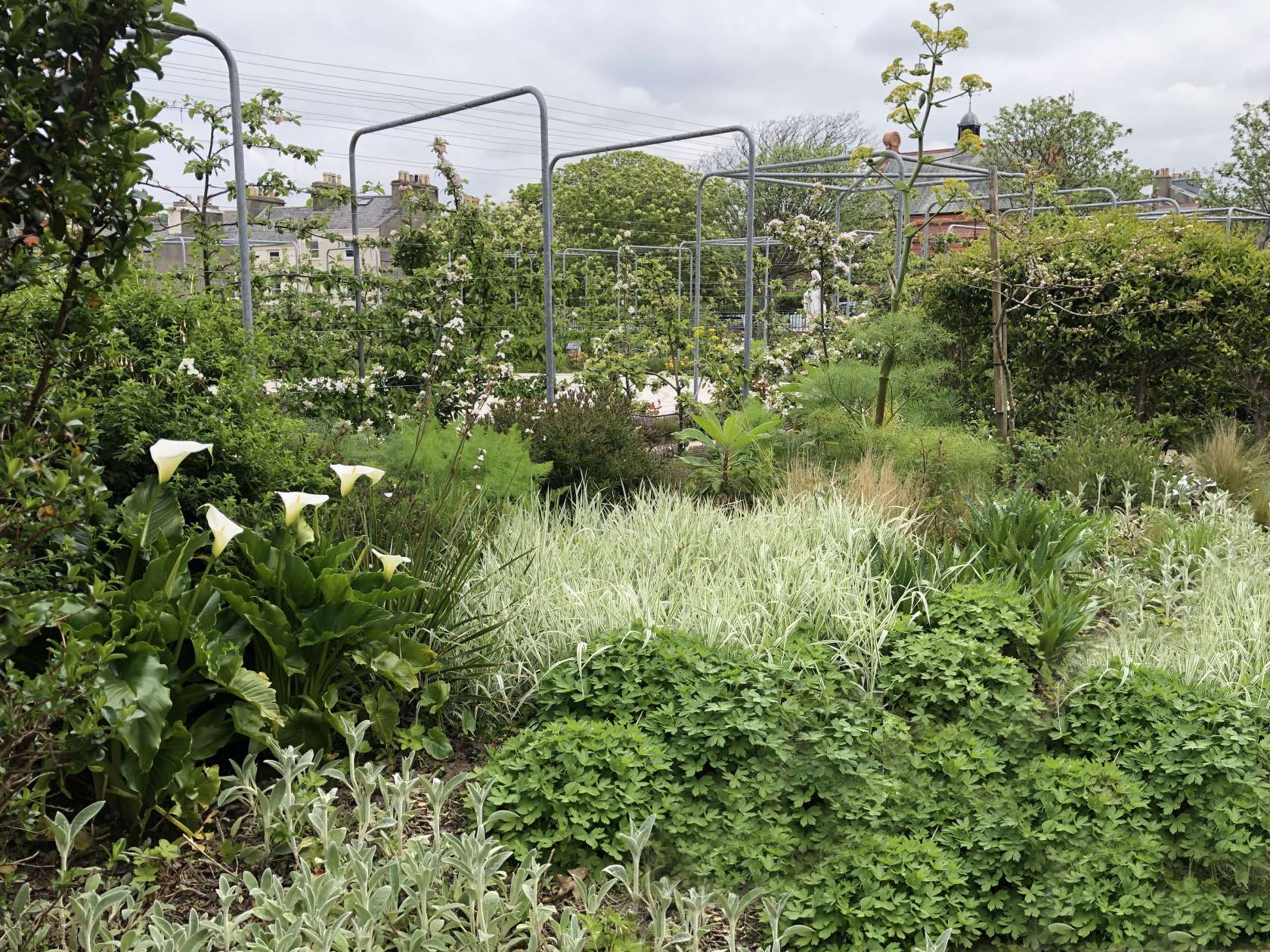
The planting around the Map is being laid out using a white planting scheme and includes the Glastonbury Holy Thorn (Crataegus monogyna ‘Biflora’) which flowers twice a year. According to legend Joseph of Arimathea visited Glastonbury with the Holy Grail and thrust his staff into the ground, which grew into the Holy Thorn. A sprig is sent to the Monarch every Christmas.
Today
Today, the Diocese of Sodor and Man only consists of the Isle of Man. The Sudreys are now part of the Scottish Episcopal Diocese of Argyle and the Isles.